
Client: Centre for Responsible Business (CRB)
Location: Kota-Bundi region, Jaipur, and Jodhpur (Rajasthan)
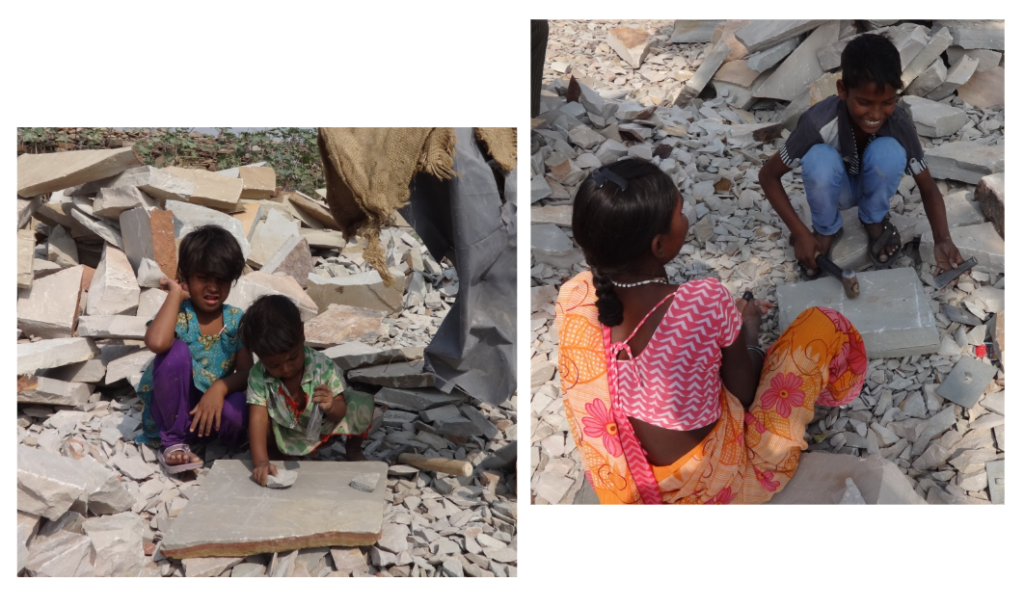
Background Context: This assignment aimed to explore the context of mining in the state of Rajasthan, specifically, in the Kota/Bundi region, to better understand the state of children in the mining industry. The study had several components, with the larger goal being to strengthen the national and state-based child protection policies, particularly around mining areas.
Objectives
Development Solutions (DS), in partnership with the Institute of Development Studies (IDSJ), was commissioned to develop an in-depth understanding of the socio-economic and working conditions of workers in the mines area and thereby suggest a possible framework and approaches to improve the situation of families, particularly children; with the engagement of several stakeholders including the industry, government, and civil society. The study was undertaken by DS to understand the following:
- Context and supply chain in sandstone mining, the involvement of labor and children, and the impact of the buyers and international market on the industry.
- The regulatory context in which mines operate, with a specific focus on labor engagement and engagement of children.
- The risks and vulnerabilities of labor, families, and children engaged in mines.
- The policies and available mechanisms of social protection and benefits for labor, families, and children engaged in mines (wage and job security; insurance; right to education, in case of children, etc.).
- The attitude and perspectives of key stakeholders on issues of mining, labor engagement in mining, child labor in mines, risks, and vulnerabilities, mechanisms of social protection for labor, and addressing issues and rights of children in labor.
- Any initiatives/ strategies/ remedial measures undertaken by various stakeholders (government, civil society, business houses, employers, etc.) to address issues of child labor and rights. and reduce risks/ vulnerabilities and barriers faced by children in labor and their families
- Document available national/ international codes and practices for addressing issues of children in labor and identifying benchmark initiatives and studies.
Approach and Methodology
- Method/ Design: The assessment employed a qualitative approach and participant observation of mining activities. This was backed by a thorough desk review. In-Depth Interviews (IDIs), Focus Group Discussions (FGDs) and informal interactions were undertaken to collect primary data
- Key Respondents/ Informants: Mine managers, laborers, contractors, processing units, exporters, government stakeholders, civil society representatives, and stakeholders from non-government organizations were interviewed
- Key Areas of Inquiry: Employment of children in the mine activities and related risks and vulnerabilities, policies and regulations for mining and quarrying, regulatory frameworks and policies for children in labor, supply chain in the sandstone industry, conditions of labor and children and mining, the role of industry, Government and civil society
- Sample: 95 (Qualitative)
Impact
The insights from the study were disseminated to key stakeholders - including the industry and government departments in Rajasthan. The study findings informed the client’s industry engagement strategy on ethical supply chains in stone mining.
Contact
17/109, Lower Ground Floor, Vikram Vihar, Lajpat Nagar IV, New Delhi – 110024