

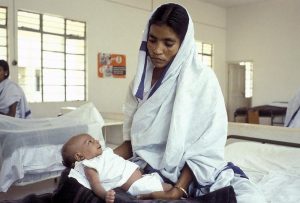
Public health systems play a vital role in shaping the well-being of communities, especially in a country as diverse and populous as India. They are expected to provide affordable, equitable, and quality health services to people across regions and socio-economic groups. Over the years, several government schemes have tried to strengthen maternal and child health, nutrition, and preventive care, especially in Tier 2 and Tier 3 cities including rural areas. Yet, despite these efforts, many challenges remain in the way the public health system functions. Drawing on lessons from monitoring and evaluation of IGMPY in Rajasthan, this essay discusses the key challenges that continue to affect the effectiveness of public health systems.
1. Human Resource Constraints
One of the biggest issues facing public health is the shortage and uneven distribution of health workers. Doctors, nurses, and frontline staff (Anganwadi workers and Lady Supervisors) are often concentrated in urban areas, leaving rural and tribal regions underserved. In the IGMPY monitoring study, we observed that Anganwadi workers were burdened with multiple responsibilities—from record-keeping to community mobilization to election duty— while often lacking adequate support. Ideally, one Lady Supervisor should be responsible for 20–25 Anganwadi centers, but due to staff shortages, many are compelled to manage more than 100 centers at a time. This overstretching not only affects service delivery but also lowers the quality of care that mothers and children receive.
From a management perspective, this highlights the need for streamlined recruitment pipelines, refresher training programs, and workload rationalization supported by digital tools. Introducing incentive-based performance systems and providing psychosocial support to staff could also help retain talent and reduce attrition rates, ensuring services are consistent and of higher quality.
2. Infrastructure and Accessibility
Infrastructure is another major bottleneck. While health centers exist on paper, many lack essential facilities such as clean delivery rooms, regular electricity, or transport for emergencies. For maternal health schemes like IGMPY, this translates into challenges in ensuring safe institutional deliveries and timely care. In several blocks we studied, pregnant women had to travel long distances to reach functioning health centers. Poor road connectivity in rural belts adds another layer of difficulty, discouraging women from seeking timely care and increasing their reliance on untrained local practitioners. These gaps show the importance of adopting a multi-sectoral approach—where investments in health are closely tied to infrastructure, transport, and rural development initiatives.
3. Implementation Gaps in Welfare Schemes
IGMPY’s design—linking cash incentives to maternal nutrition and safe pregnancies—is sound, but delivery has been uneven. Delayed transfers and limited beneficiary awareness reduce uptake. This reflects a wider challenge: progressive policies falter at execution. Strengthening last-mile delivery requires simplified processes, greater transparency in fund flows, and leveraging technology for direct beneficiary engagement. For instance, mobile- based applications and automated SMS notifications can keep women informed about entitlements and reduce
dependence on intermediaries. Capacity-building of frontline staff to handle digital systems also ensures smoother execution.
4. Monitoring and Data Systems
Accurate data is the backbone of any health intervention. Yet, monitoring and evaluation systems in public health are often weak. In our project, we noticed that while frontline workers diligently filled registers, data was not always updated, digitized, or used for decision-making. This leads to a gap between “reported” progress and ground realities. Moreover, data systems tend to focus more on quantity—such as number of check-ups—rather than quality of services delivered. Without strong monitoring, it becomes difficult to identify gaps, correct leakages, or measure real impact. A push for investment in interoperable data platforms, training frontline staff in data use, and creating accountability loops where data informs corrective action rather than just reporting is important. Embedding independent third-party verification and community feedback systems could further improve transparency and accuracy, ensuring monitoring directly influences program design and corrective action.
5. Financial and Administrative Challenges
India’s public health spending remains low at around 2.1% of GDP, despite the National Health Policy target of 2.5% by 2025. In the 2025–26 budget, the Ministry of Health and Family Welfare received ₹99,858 crore1 (1.97% of total expenditure), far below global averages (e.g., U.S. 17.9%, China 6.6%). Even where funds are allocated, disbursal delays and bureaucratic hurdles slow program implementation. For schemes like IGMPY, such delays mean beneficiaries do not receive timely cash transfers, undermining trust. Stronger financial planning and decentralization of fund management could mitigate these inefficiencies. Alongside this, there is a need to champion outcome-based budgeting and real-time expenditure tracking, ensuring that funds are tied to measurable improvements in maternal and child health indicator.
6. Inequities in Access
Access remains highly unequal. Urban and better-off households access schemes more readily than marginalized or tribal populations. Barriers such as caste-based discrimination, language differences, and lack of identification documents exclude the most vulnerable. Addressing this requires inclusive program design with flexible eligibility criteria, targeted outreach, and partnerships with local organizations that understand community dynamics.
Ensuring portability of health benefits for migrant populations is another area where systemic reform is needed, especially in states with high seasonal migration. Embedding equity audits into program reviews would ensure that no vulnerable group is consistently left out.
7. Sustainability of Programs
Sustainability is a recurring challenge once external support phases out. In IGMPY, questions arose about whether government systems could sustain quality without NGO handholding. Similar issues are evident in Kerala’s Ayushman Bharat–Karunya Arogya Suraksha Padhati (KASP) 2, where payouts (₹1,400 crore in 2021–22 and ₹1,630 crore in 2022–23) far exceeded budgets, leaving hospitals with over ₹600 crore in unpaid dues. Such cases highlight the importance of institutional capacity-building, predictable financing, and embedding schemes within government systems rather than as standalone projects. Sustainability also requires building strong ownership among state and district administrations, ensuring health interventions are not perceived as temporary “projects” but as part of the long-term health ecosystem.
8. Integration Across Sectors
Health outcomes depend not only on healthcare but also on nutrition, sanitation, education, and livelihoods. Yet, most schemes operate in silos. IGMPY showed that maternal health could not improve without addressing household food security and gender norms. A push for cross-departmental convergence, ensuring health schemes are linked with education, social protection, and livelihood programs for holistic impact is important.
Strengthening institutional mechanisms such as district convergence committees and joint planning exercises will ensure programs work together, maximizing impact without duplicating efforts.
Conclusion
The public health system in India has made important strides, but significant challenges remain. The monitoring and evaluation of IGMPY highlighted issues that are not unique to one scheme—they are symptoms of larger systemic problems: shortage of staff, weak infrastructure, delayed benefits, poor monitoring, inequities in access, and limited community awareness. Addressing these requires both structural reforms and innovative approaches. Strengthening frontline capacity, improving infrastructure, ensuring timely financial flows, investing in robust monitoring, and building trust with communities are critical steps.
Ultimately, public health cannot be seen only as a government responsibility. Partnerships with civil society, community leaders, and even private actors are essential for building resilient systems. If India is to ensure that every mother and child has access to quality care, it must tackle these challenges head-on with commitment and consistency.
References
1 https://prsindia.org/budgets/parliament/demand-for-grants-2025-26-analysis-health-and-family- welfare
2 https://www.thehindu.com/news/national/kerala/sustainability-of-states-health-insurance-schemes-in- question/article66912476.ece
Author: Akshaya Aggarwal, Former Project Manager, Development Solutions.